
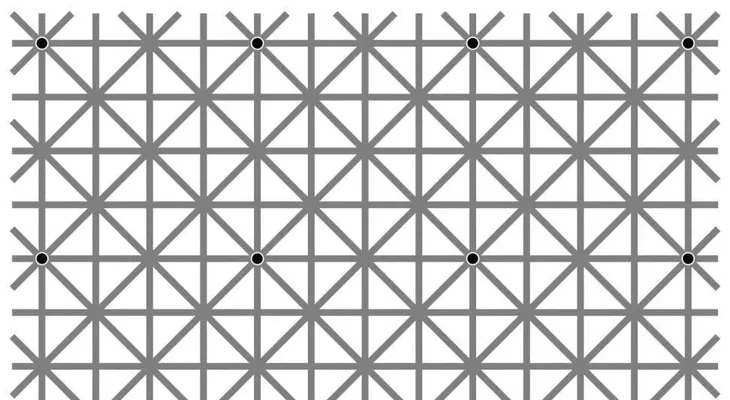

(CNN Español) - Quizá ya la viste varias veces en tus redes sociales: la publicación de un profesor japonés le está dando la vuelta al mundo y ha dejado perplejos a muchos.
Se trata de la ilusión óptica llamada ilusión de extinción Ninio, por el cientÃfico francés Jacques Ninio, que muestra una cuadrÃcula con lÃneas diagonales, horizontales y verticales que se cruzan. El objetivo: contar el número de puntos negros en las intersecciones. ( function() { var func = function() { var iframe_form = document.getElementById('wpcom-iframe-form-65c29cb30f1271b2f222806443e1b56c-57d75d0b3f9e0'); var iframe = document.getElementById('wpcom-iframe-65c29cb30f1271b2f222806443e1b56c-57d75d0b3f9e0'); if ( iframe_form && iframe ) { iframe_form.submit(); iframe.onload = function() { iframe.contentWindow.postMessage( { 'msg_type': 'poll_size', 'frame_id': 'wpcom-iframe-65c29cb30f1271b2f222806443e1b56c-57d75d0b3f9e0' }, window.location.protocol + '//wpcomwidgets.com' ); } } // Autosize iframe var funcSizeResponse = function( e ) { var origin = document.createElement( 'a' ); origin.href = e.origin; // Verify message origin if ( 'wpcomwidgets.com' !== origin.host ) return; // Verify message is in a format we expect if ( 'object' !== typeof e.data || undefined === e.data.msg_type ) return; switch ( e.data.msg_type ) { case 'poll_size:response': var iframe = document.getElementById( e.data._request.frame_id ); if ( iframe && '' === iframe.width ) iframe.width = '100%'; if ( iframe && '' === iframe.height ) iframe.height = parseInt( e.data.height ); return; default: return; } } if ( 'function' === typeof window.addEventListener ) { window.addEventListener( 'message', funcSizeResponse, false ); } else if ( 'function' === typeof window.attachEvent ) { window.attachEvent( 'onmessage', funcSizeResponse ); } } if (document.readyState === 'complete') { func.apply(); /* compat for infinite scroll */ } else if ( document.addEventListener ) { document.addEventListener( 'DOMContentLoaded', func, false ); } else if ( document.attachEvent ) { document.attachEvent( 'onreadystatechange', func ); } } )();
Desde que el profesor Akiyoshi Kitaoka publicó la imagen en Facebook el domingo, ha sido compartida más de 14.000 veces. También lo compartió el diseñador de videojuegos Will Kerslake en Twitter, y su publicación tiene más de 28.000 retweets y 26.000 'me gusta'.
There are twelve black dots at the intersections in this image. Your brain won’t let you see them all at once. pic.twitter.com/ig6P980LOT
— Will Kerslake (@wkerslake) September 11, 2016
El asunto es: ¿cuántos puntos negros hay realmente? Unos ven solo uno, otros cuentan 12 o 36... y otros simplemente dicen que no se puede determinar.
Según la explicación de Ninio (publicada junto con Kent Stevens) que recogió el Centro Nacional de Información de BiotecnologÃa, uno solo puede ver unos cuantos al tiempo. "Cuando los discos blancos en una cuadrÃcula centellante son pequeños, y están rodeados de negro, tienden a desaparecer. Uno ve solo algunos a la vez, en grupos que se mueven de forma errática en la página. Cuando uno no los está viendo, las lÃneas grises parecen continuas, generando cruces grises que no existen".
La explicación se entiende mejor con la imagen alterada con las lÃneas grises con opacidad.
@wkerslake @Gizmodo no trouble here! I can see them all 👀 😂😆😉 pic.twitter.com/pv7CfcMnjh
— TWIZTΞD V2.0 (@TwiztedShotzTV) September 12, 2016
La respuesta es... 12 puntos.
Tras el éxito de su publicación, Kitaoka compartió más ilusiones, como la de McAnany-Levine: no se pueden ver 13 puntos al tiempo. ( function() { var func = function() { var iframe_form = document.getElementById('wpcom-iframe-form-4fa84f169a5bdb8b91a630c94ddfafa0-57d75d0b400fb'); var iframe = document.getElementById('wpcom-iframe-4fa84f169a5bdb8b91a630c94ddfafa0-57d75d0b400fb'); if ( iframe_form && iframe ) { iframe_form.submit(); iframe.onload = function() { iframe.contentWindow.postMessage( { 'msg_type': 'poll_size', 'frame_id': 'wpcom-iframe-4fa84f169a5bdb8b91a630c94ddfafa0-57d75d0b400fb' }, window.location.protocol + '//wpcomwidgets.com' ); } } // Autosize iframe var funcSizeResponse = function( e ) { var origin = document.createElement( 'a' ); origin.href = e.origin; // Verify message origin if ( 'wpcomwidgets.com' !== origin.host ) return; // Verify message is in a format we expect if ( 'object' !== typeof e.data || undefined === e.data.msg_type ) return; switch ( e.data.msg_type ) { case 'poll_size:response': var iframe = document.getElementById( e.data._request.frame_id ); if ( iframe && '' === iframe.width ) iframe.width = '100%'; if ( iframe && '' === iframe.height ) iframe.height = parseInt( e.data.height ); return; default: return; } } if ( 'function' === typeof window.addEventListener ) { window.addEventListener( 'message', funcSizeResponse, false ); } else if ( 'function' === typeof window.attachEvent ) { window.attachEvent( 'onmessage', funcSizeResponse ); } } if (document.readyState === 'complete') { func.apply(); /* compat for infinite scroll */ } else if ( document.addEventListener ) { document.addEventListener( 'DOMContentLoaded', func, false ); } else if ( document.attachEvent ) { document.attachEvent( 'onreadystatechange', func ); } } )();